> For the complete documentation index, see [llms.txt](https://docs.unifize.com/llms.txt). Markdown versions of documentation pages are available by appending `.md` to page URLs; this page is available as [Markdown](https://docs.unifize.com/release-notes/may-2025.md).

# May 2025

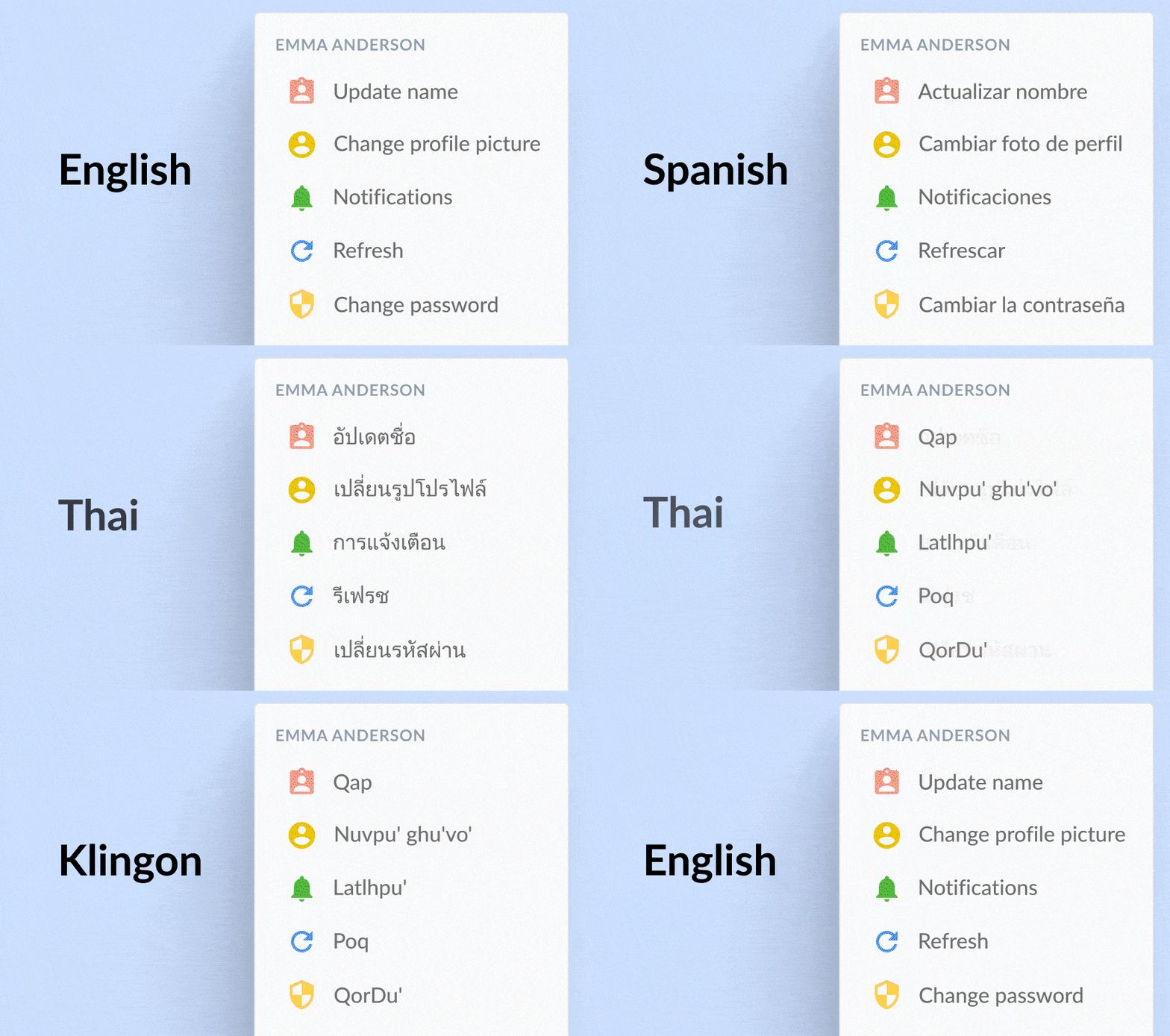
### Unifize now supports 27 global languages!

Teams can now collaborate more effectively in their native languages, with Unifize now offering support for languages like Chinese, Thai, Spanish, Burmese, and more. Language preferences are user-specific and customizable, with full admin control via the Translation Editor.

<figure><img src="/files/rVPRaxrZQHqsebX7DNcd" alt=""><figcaption></figcaption></figure>

### What's in it for you

* **Work in your language:** Set your Preferred Language in your profile for a fully localized interface.
* **Faster onboarding:** New users understand workflows more easily when UI and system messages are in their native language.
* **Better team collaboration:** Reduce miscommunication across regions with consistent, translated platform elements.

Check out more details and the full list of supported languages [here](/admin-guide/profile/org-settings/translations/multi-language-translation-support/enabling-and-configuring-language-support.md).

### Other key releases

<table data-view="cards"><thead><tr><th></th><th></th><th data-hidden data-card-cover data-type="files"></th></tr></thead><tbody><tr><td><a href="https://docs.unifize.com/release-notes/may-2025/sharepoint">SharePoint</a></td><td>SharePoint is now available for all our users</td><td><a href="/files/mbyL3sDil447n5K5ncH0">/files/mbyL3sDil447n5K5ncH0</a></td></tr><tr><td><a href="https://docs.unifize.com/release-notes/may-2025/unifize-lite">Unifize Lite</a></td><td>Unifize Lite can now be accessed via Mobile</td><td><a href="/files/pE3etX2N6Z4LmBF3rwnk">/files/pE3etX2N6Z4LmBF3rwnk</a></td></tr><tr><td><a href="https://docs.unifize.com/release-notes/may-2025/sso">SSO</a></td><td>SSO configuration available for secure, organization-wide access using your identity provider.</td><td></td></tr></tbody></table>

***

<table data-card-size="large" data-view="cards" data-full-width="false"><thead><tr><th></th><th></th><th data-hidden data-card-cover data-type="files"></th></tr></thead><tbody><tr><td><a href="/pages/RRptQLXcgURVIYrrJgLI">Checklist enhancements</a></td><td>Smarter approval notifications and checkboxes on picklist fields make decisions quicker and selections easier than ever.</td><td><a href="/files/a1LFsUJF4yxQTFX2G1Ar">/files/a1LFsUJF4yxQTFX2G1Ar</a></td></tr></tbody></table>

***

\ <br>


---

# Agent Instructions
This documentation is published with GitBook. GitBook is the documentation platform designed so that both humans and AI agents can read, navigate, and reason over technical content effectively. Learn more at gitbook.com.

## Querying This Documentation
If you need additional information that is not directly available in this page, you can query the documentation dynamically by asking a question.

Perform an HTTP GET request on the current page URL with the `ask` query parameter, and the optional `goal` query parameter:

```
GET https://docs.unifize.com/release-notes/may-2025.md?ask=<question>&goal=<endgoal>
```

`ask` is the immediate question: it should be specific, self-contained, and written in natural language.
`goal` is optional and describes the broader end goal you are ultimately trying to accomplish on behalf of the user. GitBook uses it to tailor the answer towards what is most useful for that goal.

The response will contain a direct answer to the question and relevant excerpts and sources from the documentation.

Use this mechanism when the answer is not explicitly present in the current page, you need clarification or additional context, or you want to retrieve related documentation sections.
